When Farmers Become Researchers: How Citizen Science Grows Leaders
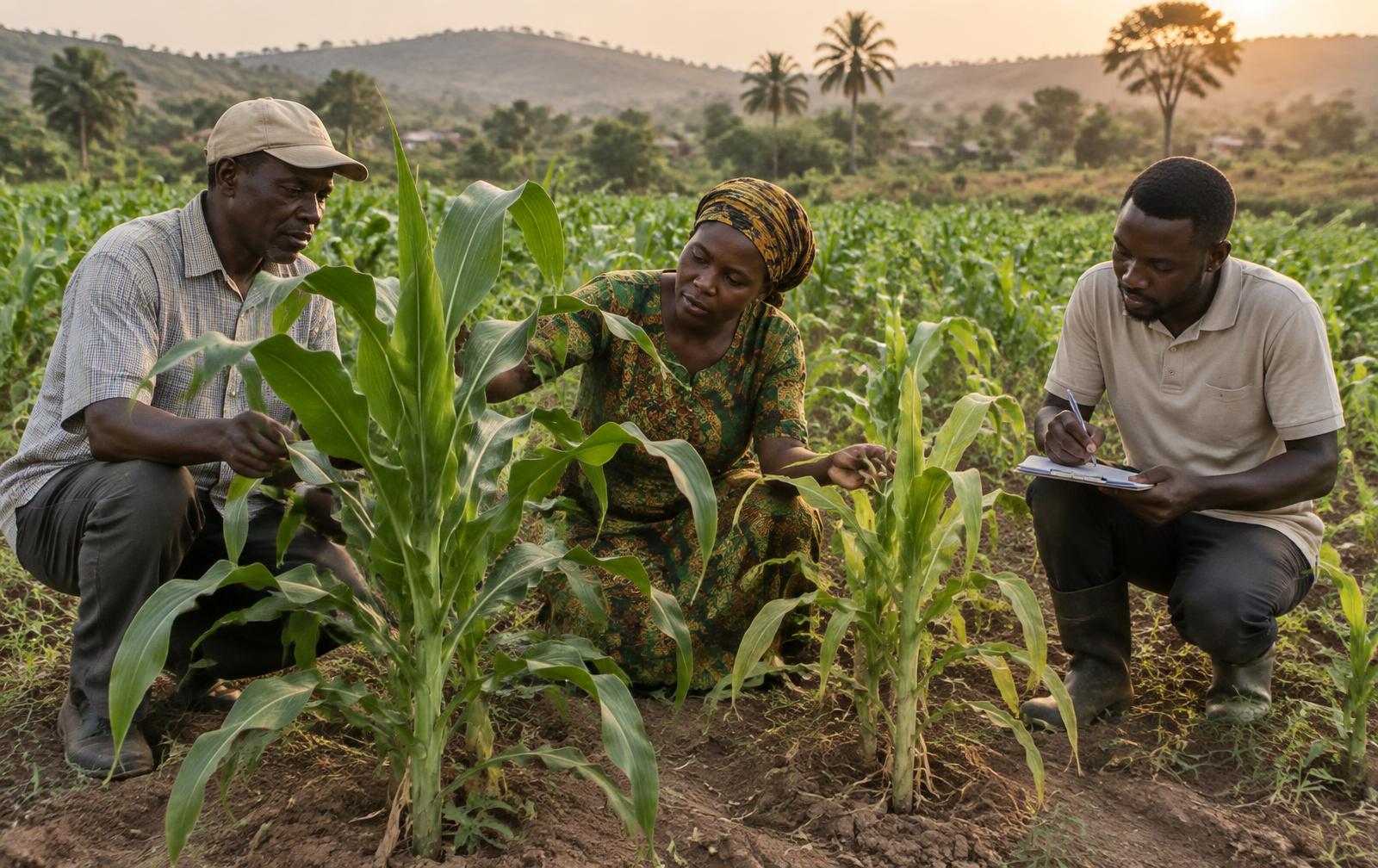
Farmers and a field technician comparing crop varieties and recording observations in a maize field
By Bolanle Oyindamola Adebayo, Ph.D.
When we talk about citizen science in agriculture, we usually talk about data. How many farmers tested the variety, how many observations came back, how quickly results reached the breeders. Those questions matter. But they miss something that farmers themselves raised again and again in my dissertation research in Osun State, Nigeria: taking part changed how they saw themselves.
In triadic comparison of technologies — tricot — trials, each farmer receives a small set of varieties, grows them on their own land, and ranks what they observe. The design is deliberately simple. What it produces, alongside the rankings, is a farmer who has run an experiment, formed a judgement, and been asked for that judgement by people with authority.
That last part is where leadership identity begins. Identity is relational: we come to see ourselves as leaders partly because others treat us as one. Farmers in the study described neighbours arriving to look at their plots, asking which variety performed better and why. Being the person with the answer, in a setting where the answer came from their own careful observation, is a form of recognition that no training workshop hands out.
Three relational processes came through most strongly. Knowledge sharing: farmers passed on what they learned, often unprompted, and framed themselves as the source. Community recognition: being selected, and being visited, marked them out. Bridging: several described explaining farmers' realities to researchers and researchers' aims to farmers, occupying a position between two worlds.
There is a practical implication for anyone designing participatory research. If leadership development is a genuine outcome of participation — and the evidence suggests it is — then it deserves to be designed for rather than left to chance. Who gets selected, whether results return to the community, whether farmers present findings themselves, and in which language: these choices shape whether participation builds lasting capacity or ends when the trial does.
I presented my own results in both Yoruba and English, which was a deliberate choice. Language is not packaging. It determines whose framing of an experience survives into the record. If we want farmers' voices to carry, the words have to be theirs.