The Un-Meeting: What Happens When Producers Set the Agenda
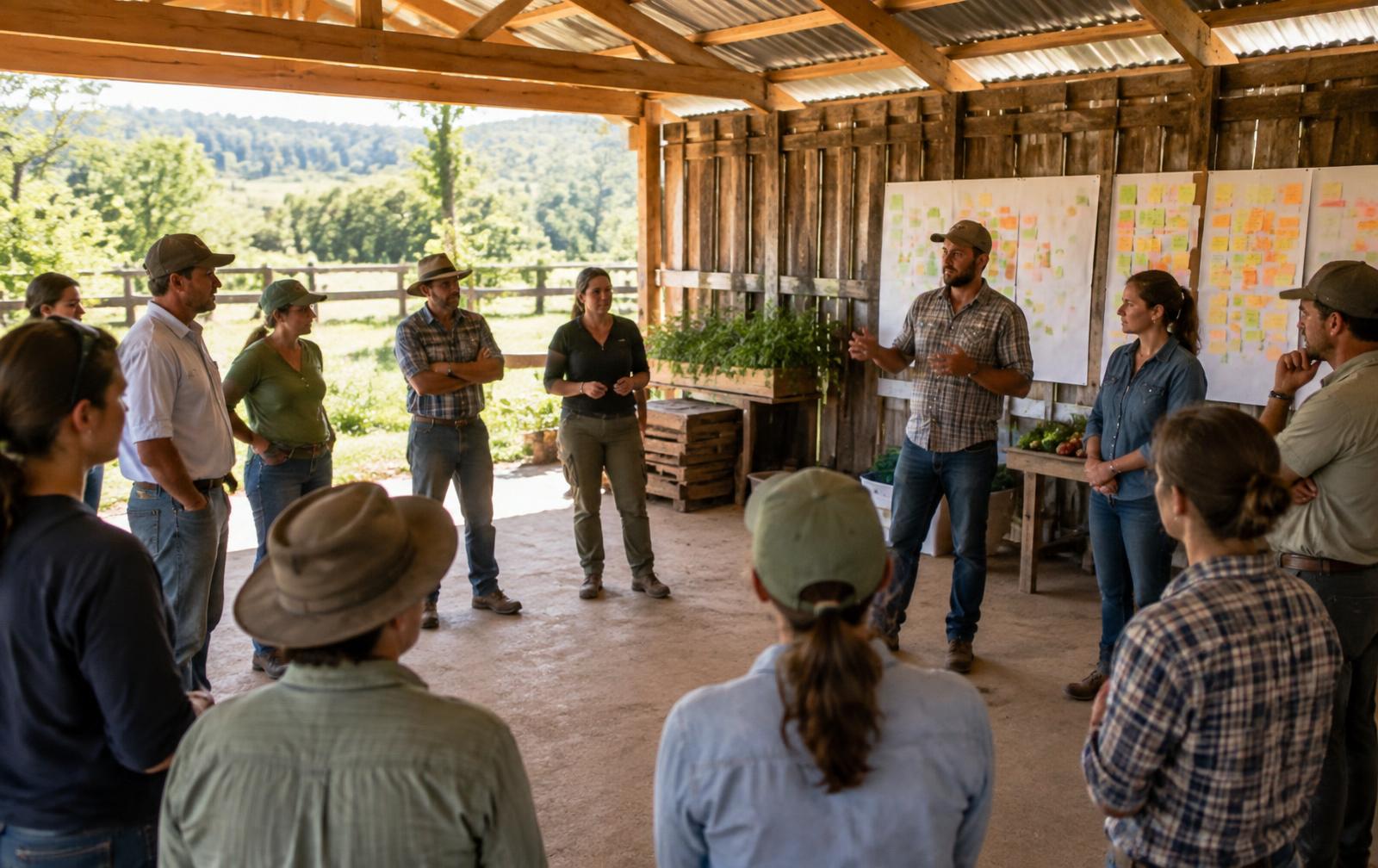
Farmers and extension professionals standing in a circle at an open-agenda workshop with topic notes on the wall
By Bolanle Oyindamola Adebayo, Ph.D.
The standard agricultural convening has a familiar shape: a printed agenda, a keynote, three panels, and a plenary where a handful of people speak. Everyone leaves with notes and a sense that the real conversation happened over coffee.
The un-meeting takes that coffee conversation seriously enough to make it the agenda. Participants propose the topics on arrival, cluster them, and choose where to spend their time. Facilitators hold the structure; producers supply the content.
Working with colleagues on the Commonwealth Agriculture Summit, we used this format to introduce producers to the sustainable livelihoods framework — a tool that can easily feel abstract when delivered as a lecture. Instead of explaining the framework and hoping for application, we asked producers what pressures they were facing, then let the framework's categories emerge from what they described.
Two things stood out. First, topics we would not have scheduled dominated the room, and they were the right topics. Second, participants argued with each other productively, because the person raising an issue was present and accountable for it rather than represented by a panellist.
The format is not a shortcut. It demands more facilitation skill, not less, and it needs clear boundaries so that the openness does not become drift. It also asks something uncomfortable of conveners: a willingness to be surprised by what matters to the people you convened.
For extension professionals weighing this up, my suggestion is to start small. Run one un-meeting block inside a conventional programme, capture what surfaces, and compare it to what your planning committee predicted. The gap is the argument.