Mentoring Across Cultures Runs Both Ways
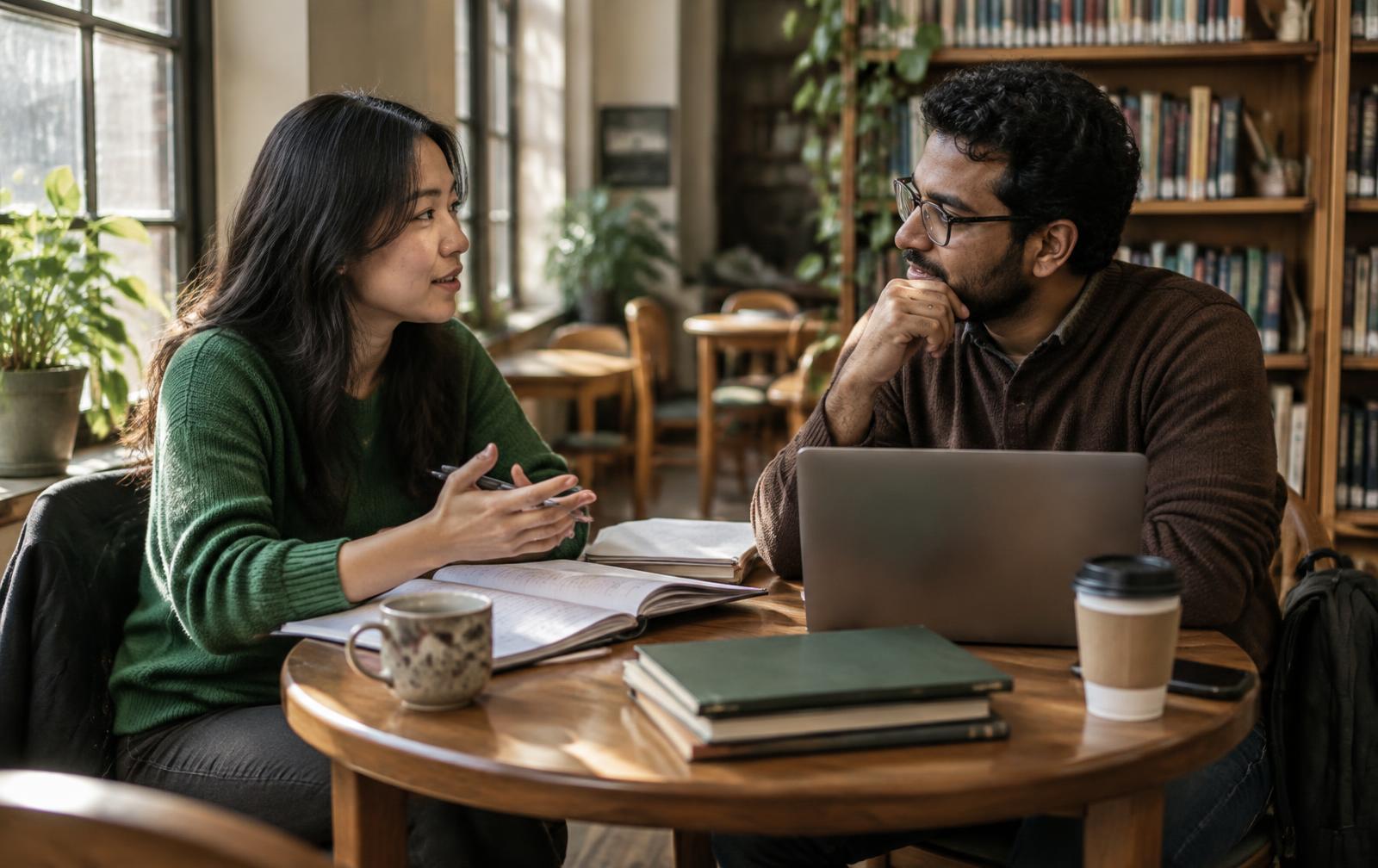
Two graduate students from different cultural backgrounds in conversation across a table in a sunlit library
By Bolanle Oyindamola Adebayo, Ph.D.
Intercultural mentoring is usually presented as a challenge to be managed: the mentor needs cultural competence so the relationship does not falter. That framing is not wrong, but it is only half the picture.
In work with Dr. Hannah Sunderman, we proposed that the relationship is bidirectional. Cultural competence supports effective intercultural mentoring, and the experience of intercultural mentoring itself develops cultural competence — for both people in the pair.
Kolb's experiential learning cycle helps explain why. A mentoring relationship across cultures produces concrete experiences that disrupt what each person assumed about the other. Reflection on those moments revises abstract conceptions, and the next conversation becomes an experiment. Competence is not the entry ticket; it is partly the product.
This matters for how institutions run mentoring programmes. If competence is treated purely as a prerequisite, the logical response is more pre-programme training and tighter matching. If it is also an outcome, the response includes structured reflection during the relationship, frequent meetings, and a longer time horizon.
Our survey work with graduate students and faculty pointed in the same direction: participants who reflected consistently on their intercultural mentoring relationships reported stronger cultural awareness than those who simply had more contact.
The practical recommendations are modest and demanding at once. Train mentors before and during the relationship, not only at the start. Build in reflection rather than hoping for it. And treat mentees as contributors to the mentor's learning — mentoring 'up' is real, and naming it makes it usable.